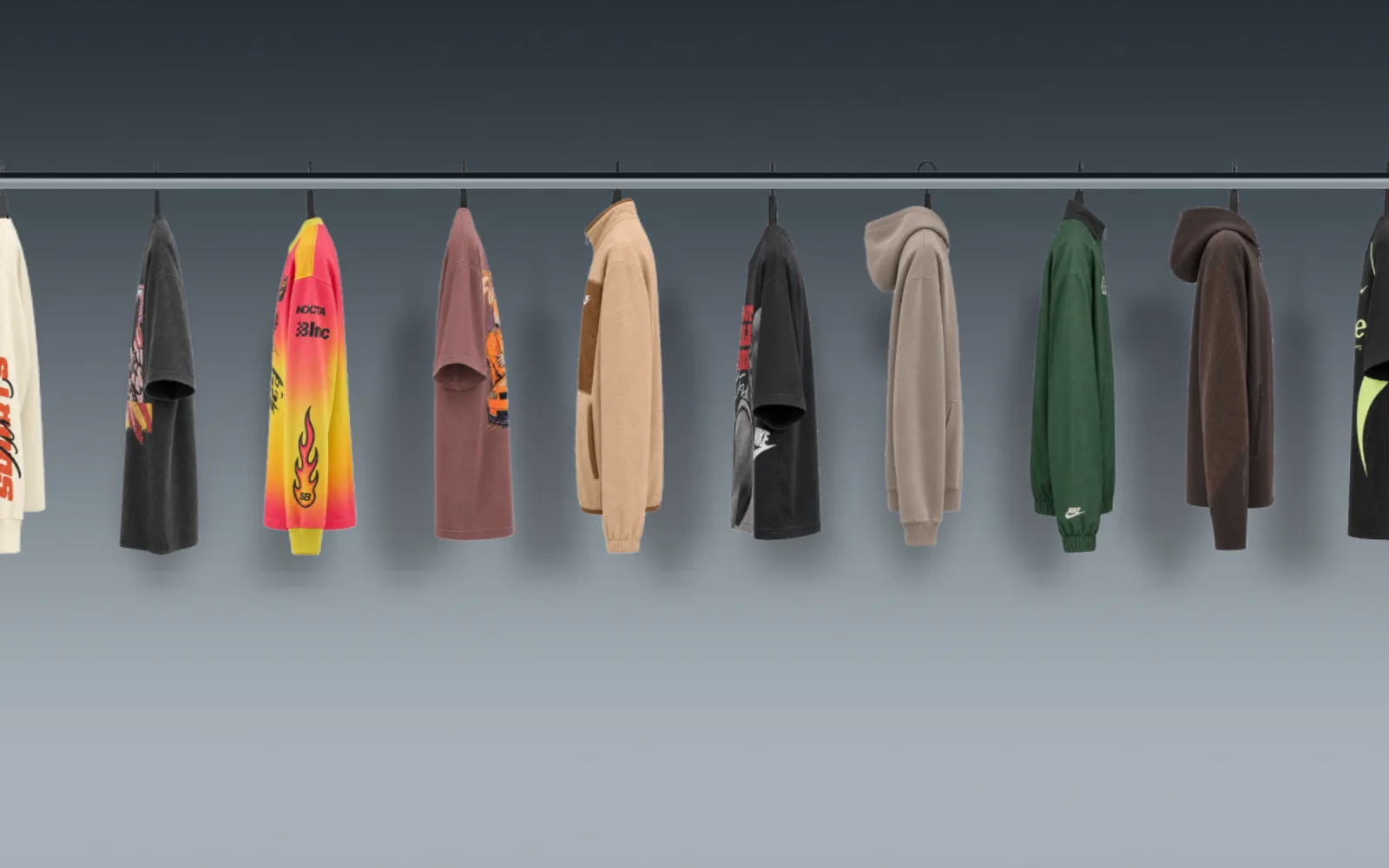
Nike Air Archive
Scroll into the poster and the camera pushes through it into the room, where you can drag to look around or rest near the edge of the screen and the view keeps turning. Walk up to a rack with a click, and the garment you hover turns to face you while its neighbors slide apart. Click one to see its price, color, and sizes, spin it by hand, and add it to the bag.
- html5
- css3
- javascript
- three.js
- Format
- Interactive experience
- Platform
- Desktop + Mobile
- Engine
- three.js + GLSL
- Type
- Concept
How It Works
Enter
Look
Turn
Inspect
Engineering
Garments that turn without a 3D model
Each garment is a flat plane showing five generated angles, made from its product page photos. Every step between two angles carries an optical flow field baked into one atlas, and a fragment shader warps both frames toward each other as they blend. A standard dense flow pass left a doubled sleeve on the hardest step of one tee, at a mean warp error of 19.5 gray levels. These frames are dark and low in texture, so I switched to a solver that tracks them. That step dropped to 4.1.One color ramp lights the whole room
The scene has no light objects. Walls, floor, and ceiling each compute a lightness value and look it up in one ramp, built from 11 CSS tokens and interpolated in OKLab, and the steel racks reflect an environment map rendered from that same ramp, so the metal picks up the colors of the walls around it.A store that still opens when a file fails
The store loads 90 garment files before the room appears. Waiting on all of them together let one failed request hold the preloader up, so I made each file settle on its own, and a complete garment from the same hall replaces any garment missing a frame. If WebGL or the 3D library is unavailable, or no garment arrives whole, the loader stops and shows a retry link.
More projects
 View project
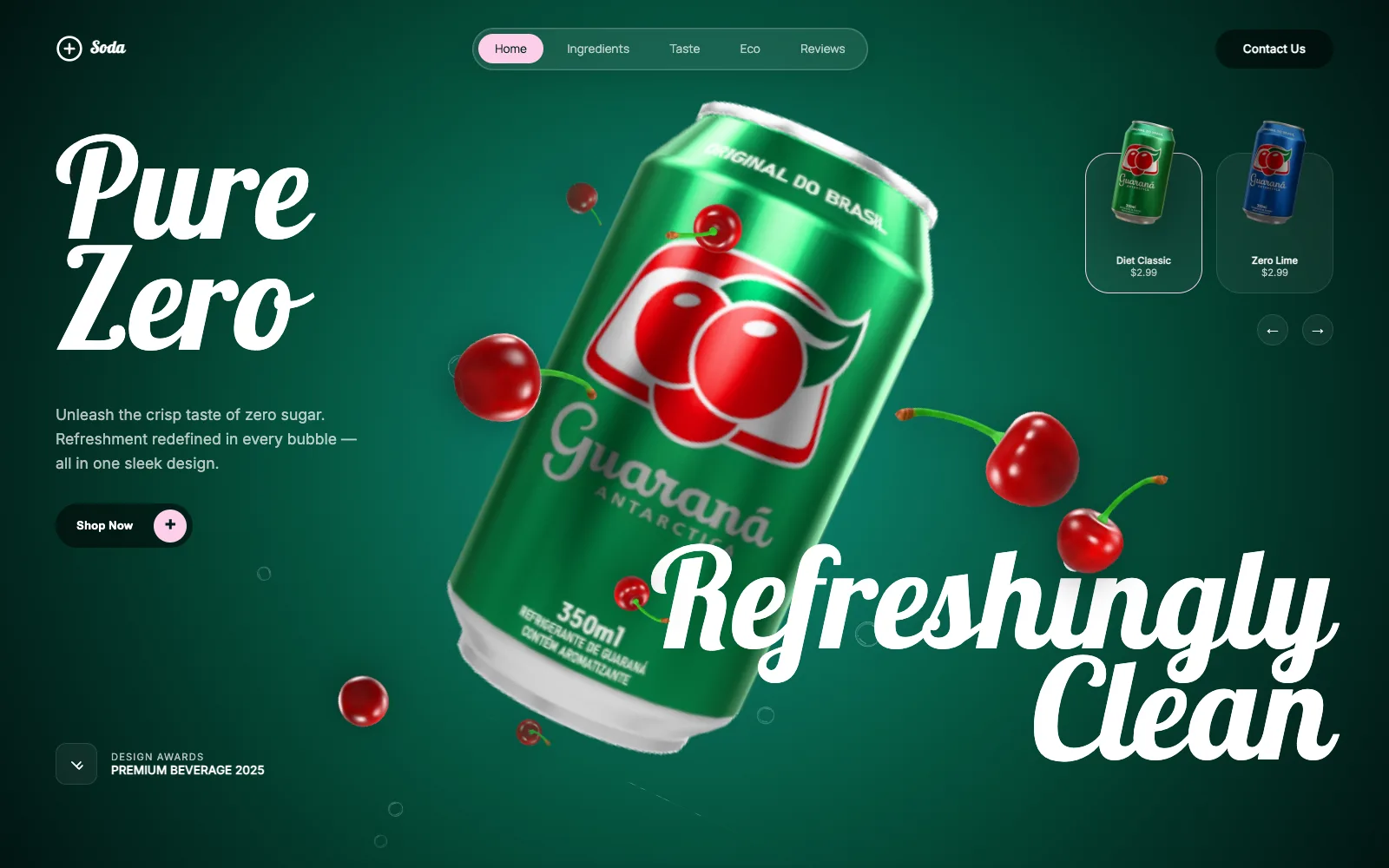
Soda
Soda is a 3D product landing page where the can follows the visitor through four sections, turns once between each, and settles with its label facing out.
 View project
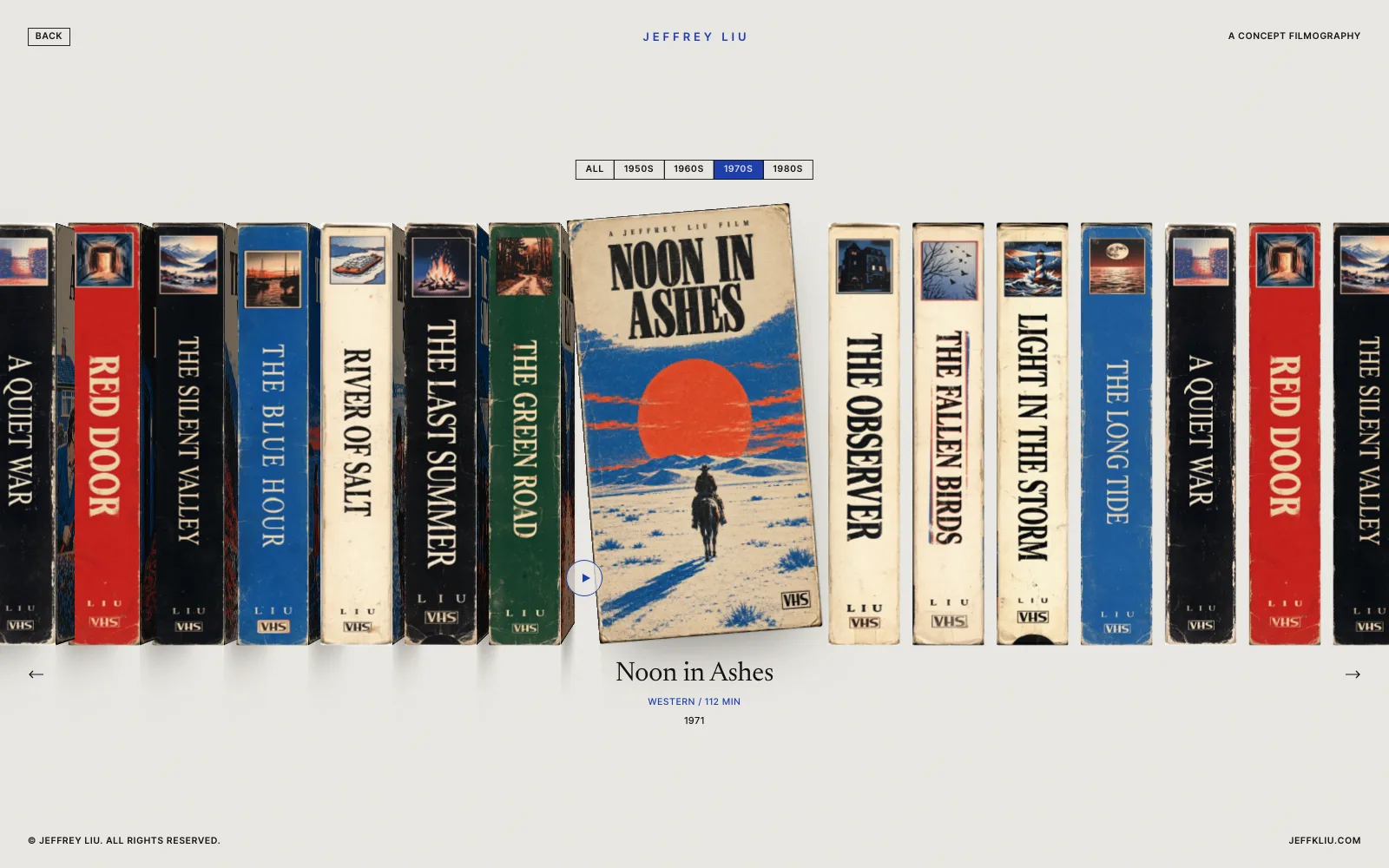
VHS Shelf
VHS Shelf is a concept filmography of twelve invented films, which I designed and built as a single page. The film at the center of an endless 3D shelf of worn VHS tapes turns out of the row to show its cover, and a click opens it into a full-screen sheet of paper.
Get in touch
Working end to end across design, creative, and engineering, where creativity, collaboration, and ownership build toward the company's goals.
jeffkliu@gmail.com