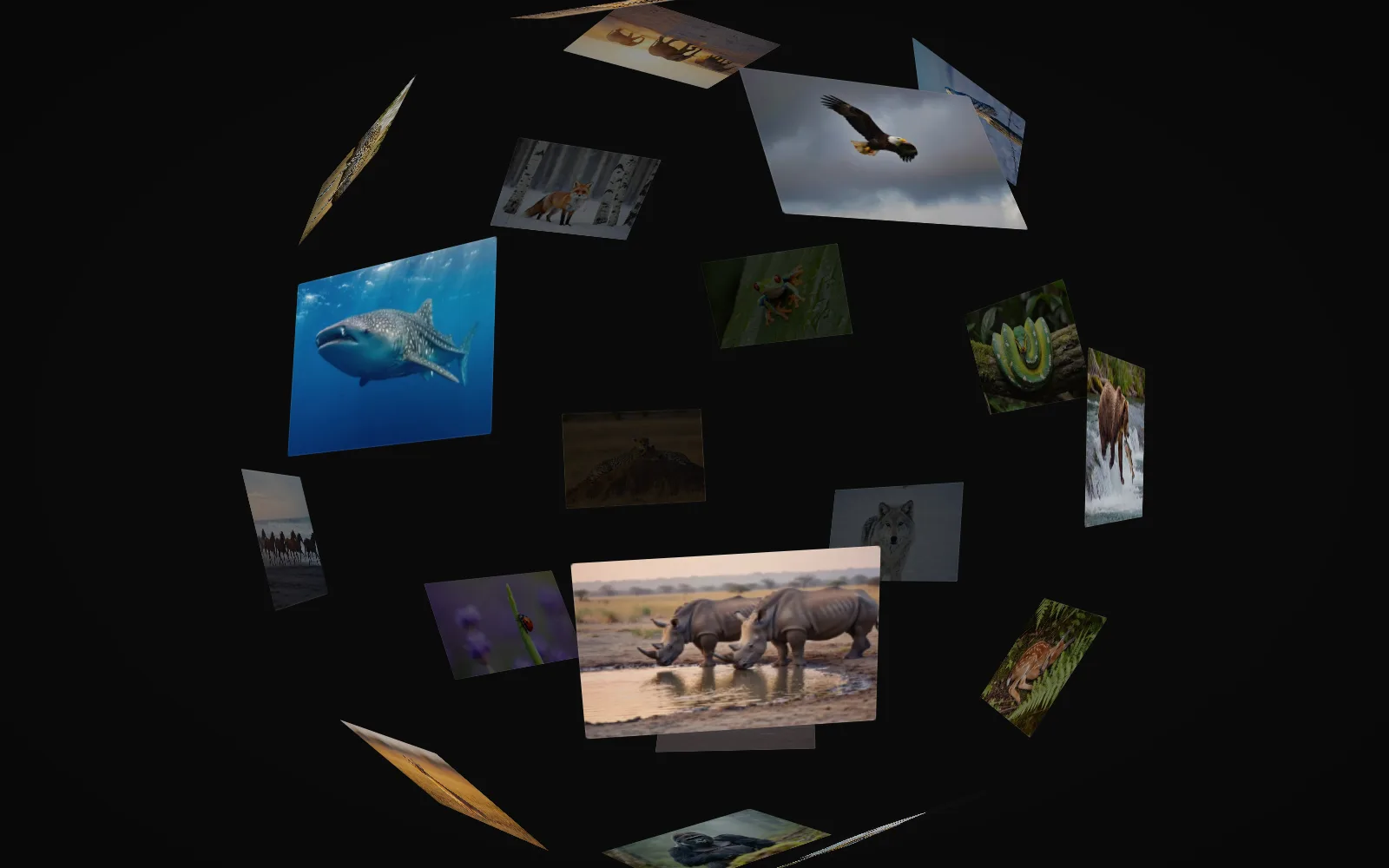
Sightline
Twenty-one wildlife frames hang on the surface of a sphere around the title. Drag to turn it and let go to watch it coast to a stop, scroll to move in closer, or switch to a flat grid of every frame. Click a photo and it lifts out of the sphere into a plate with its title, place, and field note. The photographer, Rowan Lind, is fictional, and every image, including the intro film, was generated with Runway.
- html5
- css3
- javascript
- Format
- Interactive experience
- Platform
- Desktop + Mobile
- Engine
- CSS 3D + requestAnimationFrame
- Type
- Concept
How It Works
Load
Turn
Approach
Open
Engineering
A title that stays at the center
The title lives inside the 3D world at the same point as the sphere's origin, so the nearest photos pass in front of it. Every frame, its transform cancels the world's rotation and then pushes it forward along its own axis. The words stay square to the camera and centered in the ring while the photos turn around them, on a desktop and on a phone.Depth as a flat wash
Each card's distance from the camera comes from rotating its position on the sphere by the current yaw and pitch, which takes a few multiplications instead of a layout read. That depth drives a black wash over the photo instead of a CSS filter, and the page writes a card's opacity or wash only when the value changes.Decode once, size per screen
Every photo is decoded once onto a canvas and scaled to a width set by the screen size, and that one copy feeds both the sphere card and the grid tile. The sphere is already laid out and turning behind the splash, so its first visible frame does not jump.
More projects
 View project
VHS Shelf
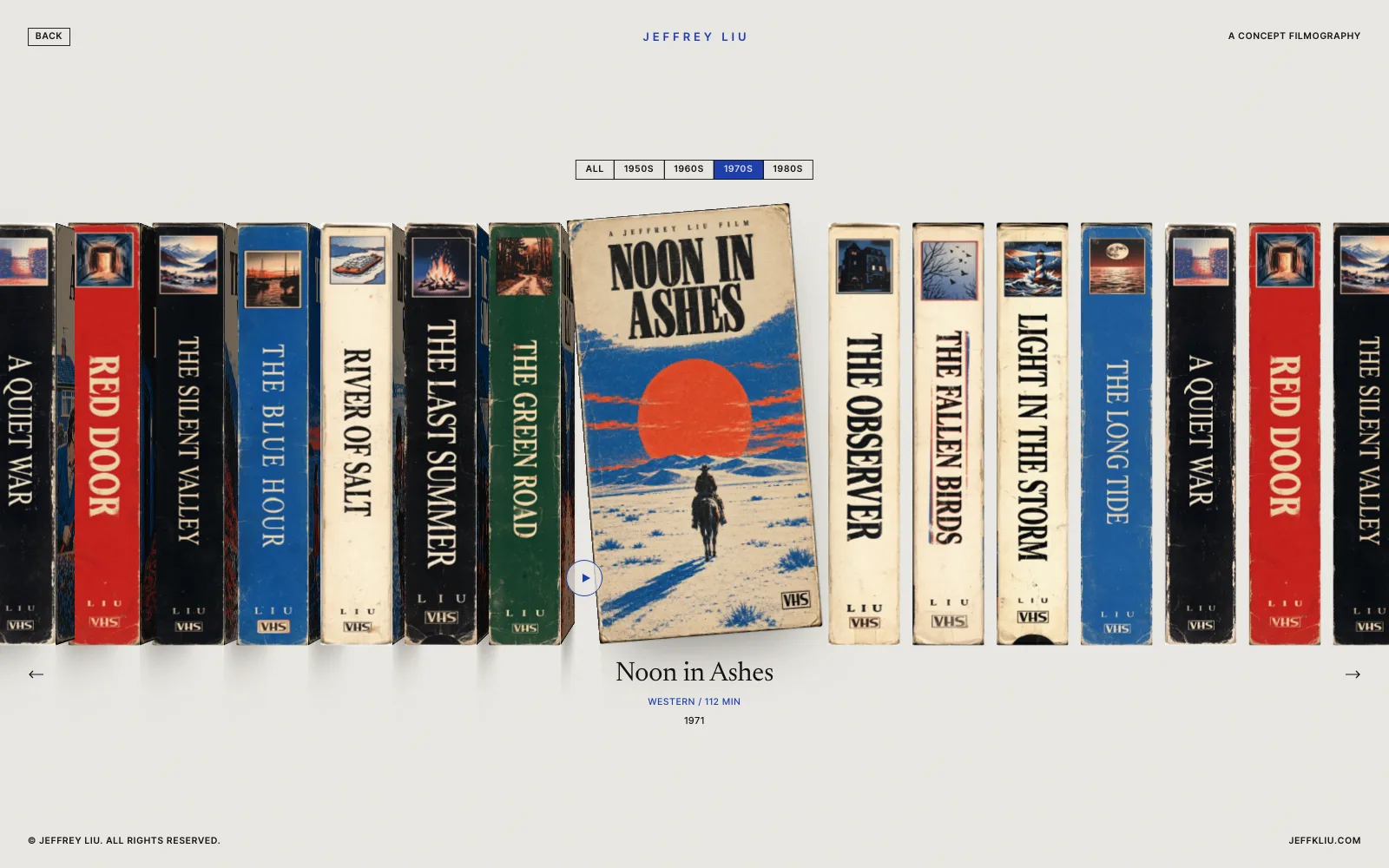
VHS Shelf is a concept filmography of twelve invented films, which I designed and built as a single page. The film at the center of an endless 3D shelf of worn VHS tapes turns out of the row to show its cover, and a click opens it into a full-screen sheet of paper.
 View project
Soda
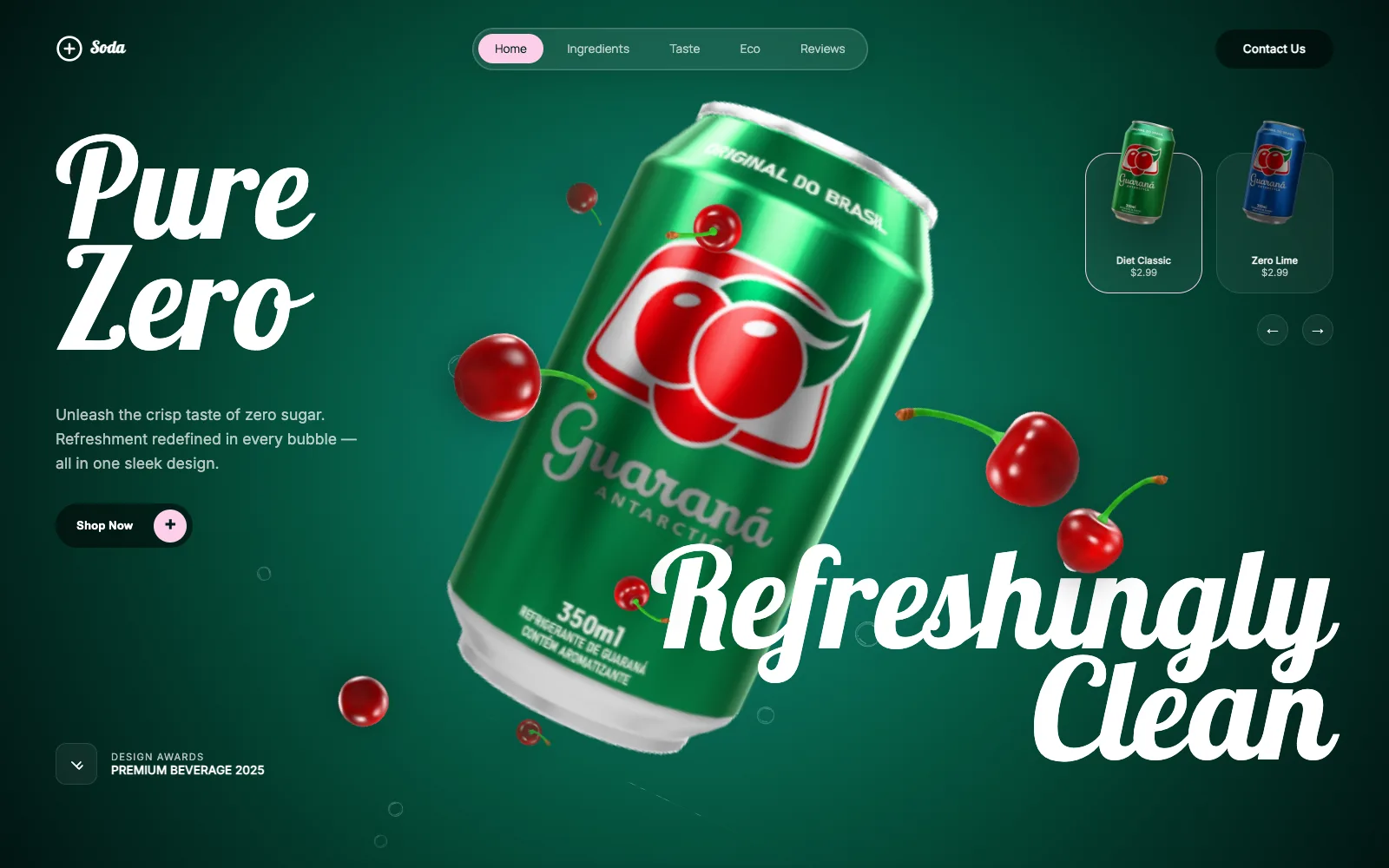
Soda is a 3D product landing page where the can follows the visitor through four sections, turns once between each, and settles with its label facing out.
Get in touch
Working end to end across design, creative, and engineering, where creativity, collaboration, and ownership build toward the company's goals.
jeffkliu@gmail.com