How It Works
A single Instagram carousel can feed a thread on X, a LinkedIn post, a blog draft, a podcast snippet and a video script, so I built the step that does it automatically, with nothing published until someone reviews it.
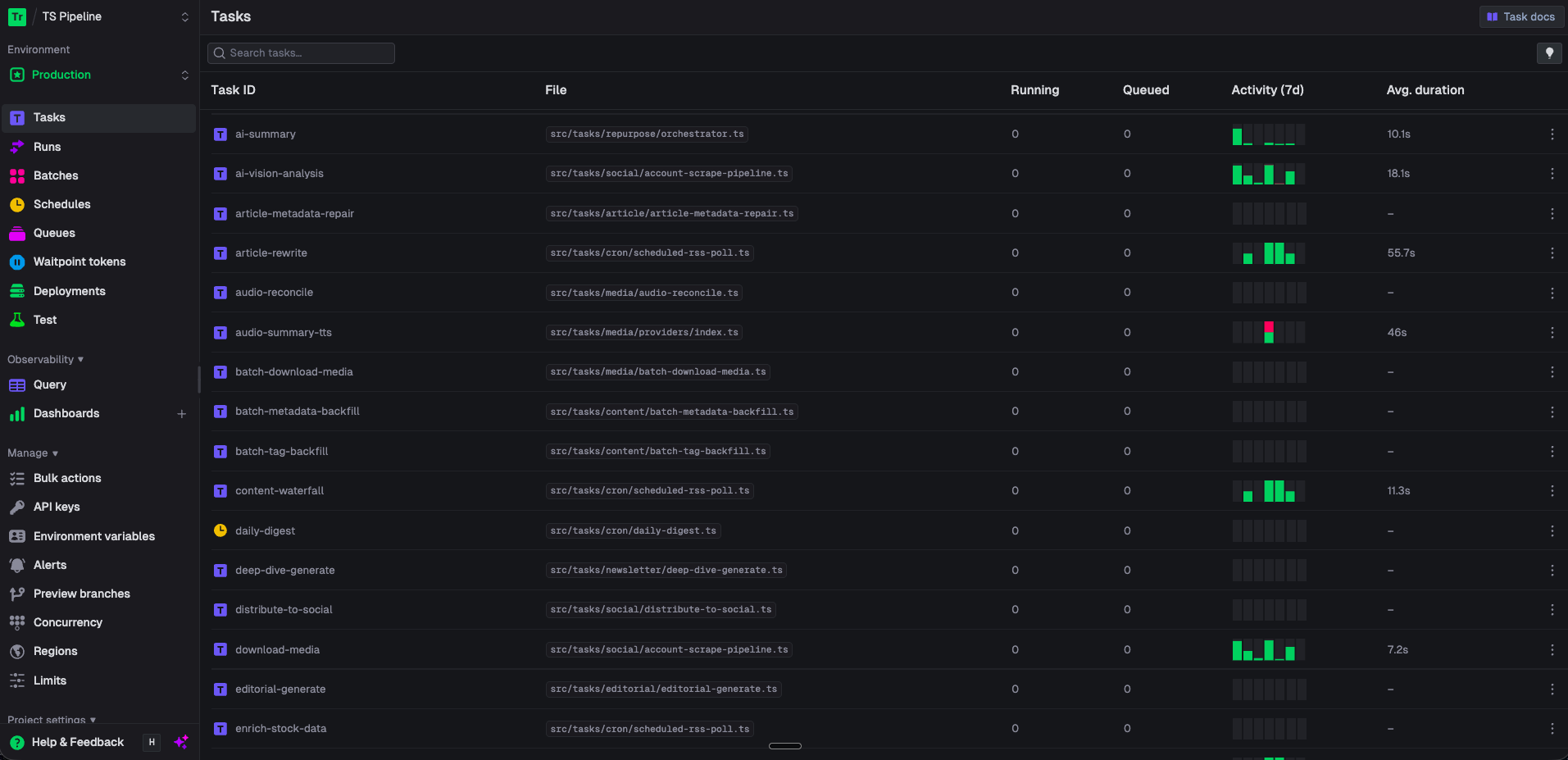
A Trigger.dev pipeline ingests each post, analyzes its media and engagement, and generates the formats.
Three Layers of Intelligence
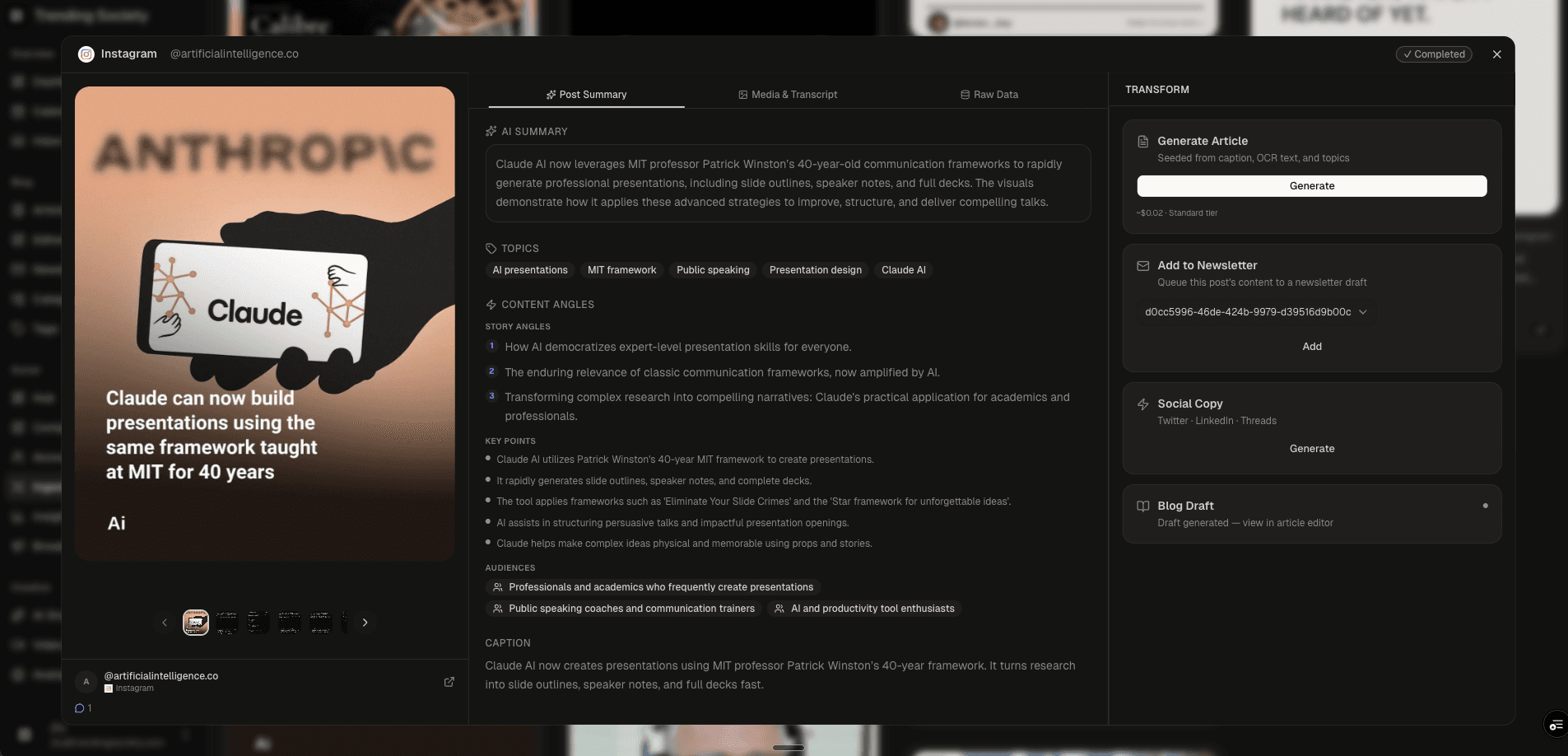
Post Summary
The first tab breaks down each post into structured insights:
- AI Summary: A concise description of the post's subject matter, synthesized from text, visual analysis, and metadata
- Topics: Classified topic tags (e.g., "AI presentations," "MIT framework," "Public speaking")
- Content Angles: 3 distinct angles a content manager could pursue, each framing the topic for a different platform or audience
- Key Points: Factual claims and talking points worth expanding into long-form content
- Audiences: Identified audience segments (professionals, coaches, enthusiasts) for targeting
- Suggested Caption: An AI-generated caption ready for cross-posting or repurposing
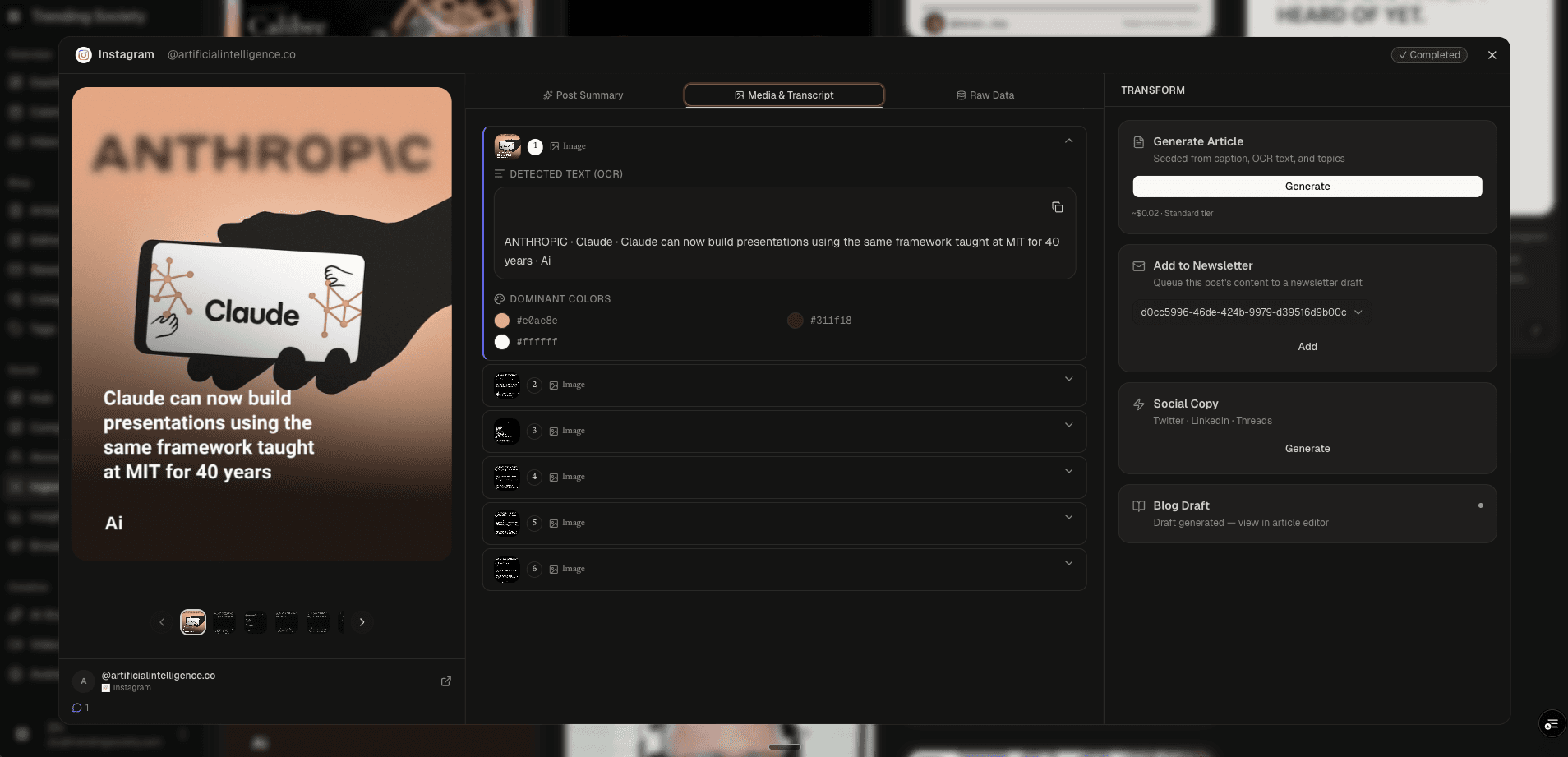
Media & Transcript
The second tab analyzes the visual layer:
- OCR Text Detection: Identifies embedded text from images, slides, and graphics
- Dominant Colors: Detects brand colors and palette for visual consistency across channels
- Multi-Image Indexing: Each slide in a carousel is analyzed independently, enabling per-frame content repurposing
Raw Data
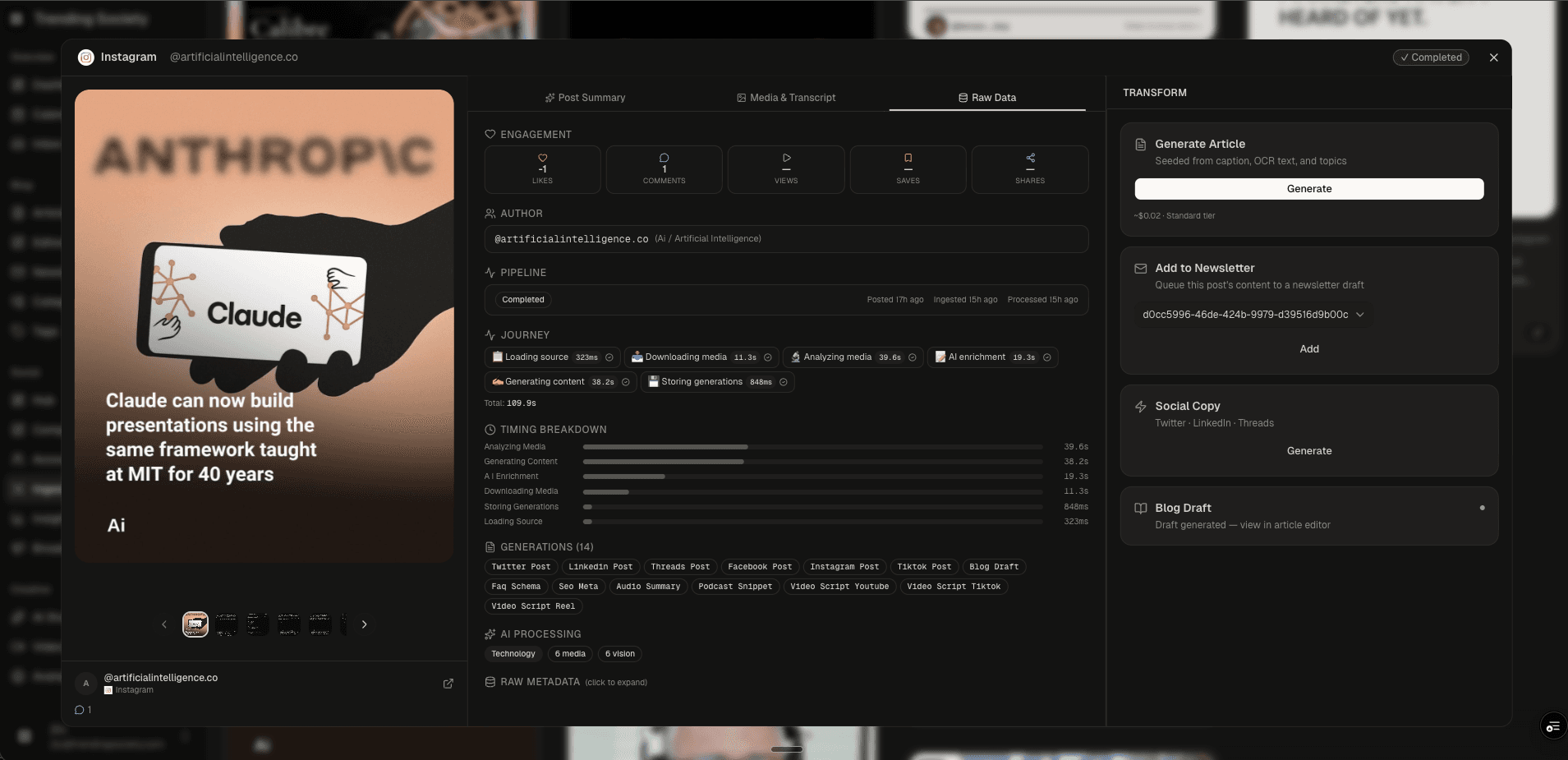
The third tab is the engineering view:
- Engagement Signals: Likes, comments, views, saves, shares from the platform API
- Pipeline Journey: A visual timeline of every processing step (Source Fetch → Media Analysis → AI Enrichment → Content Generation → Storage) with per-step latency
- Timing Breakdown: Horizontal bar chart showing where processing time is spent (Media Analysis: 39.6s, Content Generation: 38.2s, AI Enrichment: 19.3s)
- Content Inventory: The formats generated for this post (14 here; the system supports up to 17): Twitter, LinkedIn, Threads, Facebook, Instagram, TikTok, Blog Draft, FAQ Schema, Audio Summary, Podcast Snippet, Video Script (YouTube, TikTok, Reel)
- AI Processing Summary: Category classification, media count, vision analysis count
Affiliate Matching
The system keeps a registry of affiliate programs. When a post is analyzed, it scores the post's topics, category and keywords against each program and returns the best match.
A post about AI productivity tools, for example, matches an affiliate program for developer or AI tools in that category, and the matching CTA or disclosure goes into the generated content before it publishes.
This turns content production and monetization into a single workflow instead of two separate processes.
Content Tools Panel
The right sidebar turns analysis into deliverables:
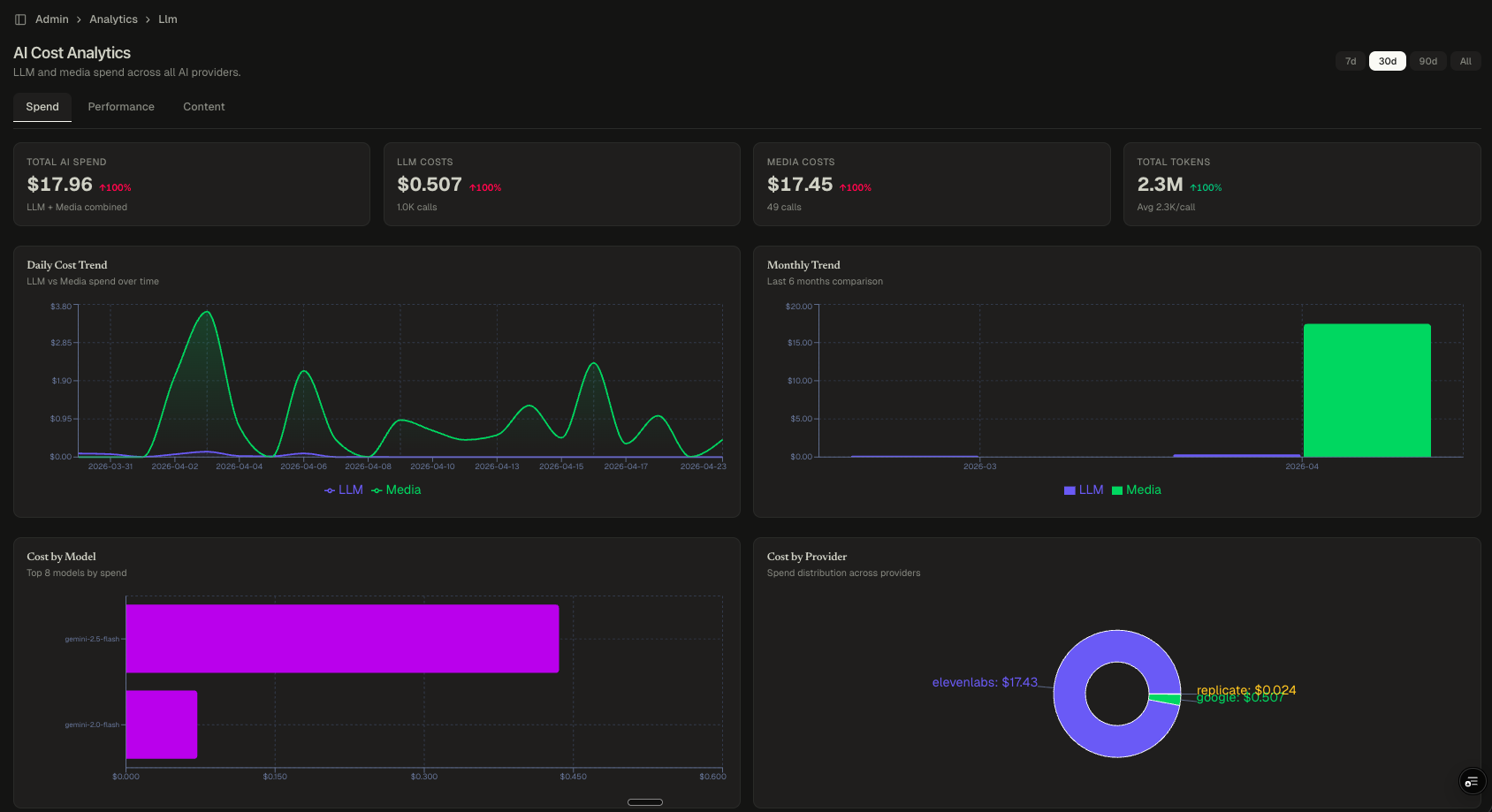
- Generate Article: Creates an original long-form article from the post's topic and context (~$0.02 per generation)
- Add to Newsletter: Queues the content into a newsletter draft with one click
- Social Copy: Generates platform-specific posts for cross-channel distribution (Twitter, LinkedIn, Threads)
- Blog Draft: Links directly to the article editor with the generated draft pre-loaded
Every output feeds back into the attribution layer. The generation is tracked, costed, and traceable to the original post that informed it.